Temperature-Controlled.
Held to the Degree.
Outside it can be 104 in Phoenix or 9 below in Fargo. Inside the trailer, your freight rides at the setpoint you booked: pre-cooled before loading, monitored every mile, documented at delivery. From -20°F deep frozen to 70°F climate protect.
Quote Your Temperature-Controlled Shipment
What is temperature-controlled shipping?
Temperature-controlled shipping moves freight in an insulated trailer with its own refrigeration unit, a reefer, that holds the cargo space at a precise setpoint anywhere from 20 below zero to 70 degrees. Conditioned air travels through a ceiling chute from the unit at the nose to the doors at the tail, wrapping every pallet in the same temperature for the entire run.
The hardware is the easy part. A cold chain holds because of process: the trailer pre-cooled and verified before loading, product temperatures pulped at the dock, the setpoint written on the bill of lading, and the box monitored every mile so drift gets caught while it is still a maintenance item instead of a claim. AFX Logistics runs that process on every temperature-controlled load, with spot capacity for one-off moves and dedicated reefers for recurring lanes.
Reefer is the right call when:
- ✓The product ships with a labeled temp range: frozen, chilled, or controlled
- ✓Summer heat or winter freeze would ruin otherwise dry-van freight
- ✓FSMA, USDA, or pharma rules require documented temperatures
- ✓The receiver pulps product at the dock and rejects warm loads
- ✓A few degrees of drift is the difference between revenue and a claim
Every product has a number. Dial yours in.
A reefer does exactly what the setpoint tells it to, so the setpoint is the whole conversation. Ice cream wants 20 below. Bananas die under 55. Pharma audits the entire lane. The right number, the right run mode, and a verified pre-cool are most of what separates a clean delivery from a rejected one.
Pick your commodity and the finder returns the setpoint band we run it at, whether the unit cycles or holds continuous air, and what the box should read before loading starts. Your product spec sheet always has the final word.
Reefer Setpoint Finder
Pick the commodity. Get the setpoint, the run mode, and the pre-cool target.
Fresh Produce: setpoint 34°F, typical band 33 to 38°F, continuous operation.
Most produce rides at 34°F with continuous airflow carrying off field heat and ethylene.
Setpoints reflect standard cold chain practice. Your product spec sheet always has the final word, and your specialist confirms the setpoint on every tender.
- Around -20°FDeep Frozen
- -10 to 0°FFrozen
- 28 to 41°FRefrigerated
- 45 to 70°FControlled
- Ice cream-20°F
- Frozen food0°F
- Produce34°F
- Pharma41°F
- Wine55°F
Three Ways a Cold Chain Breaks
Almost every temperature claim traces back to one of these. We engineered the process around all three.
The Missed Pre-Cool.
A trailer that shows up warm soaks your product in stored wall heat before the doors even close. Our pre-cool order ships with the load tender, and the box is verified at your setpoint before loading starts. A warm trailer does not get loaded.
The Silent Drift.
Reefer units rarely fail loudly. They drift a degree at a time while the truck rolls on. Telemetry streams box temperature the whole run, and a human dispatcher is alerted the moment a reading leaves your range, while it is still fixable.
The Paper Gap.
The load delivered cold, but nobody can prove it. We write the setpoint on the BOL, log the box temperature every mile, and file the full temp history with the signed POD. Audits and claims get answered with data, not arguments.
You Cannot Babysit a Trailer. Software Can.
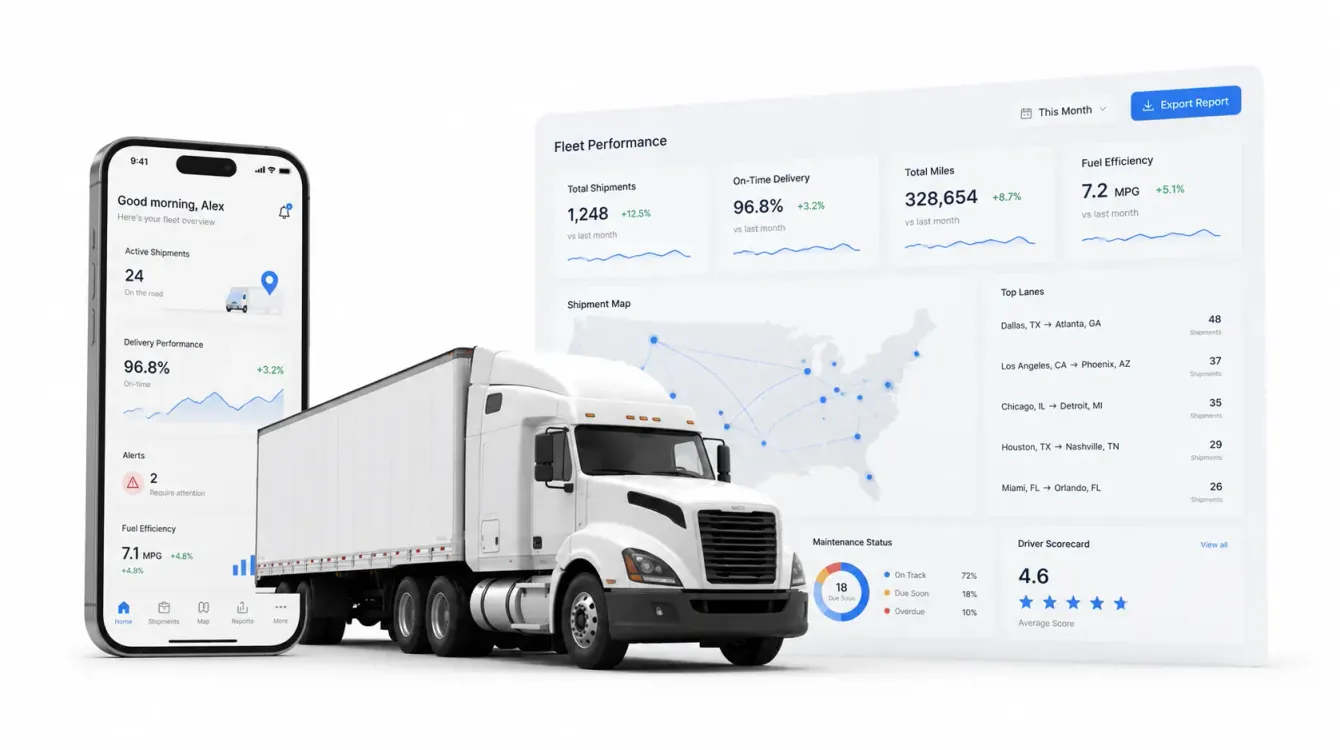
Most shippers find out a reefer drifted when the receiver opens the doors. AFX streams unit telemetry the entire run, position and box temperature in one feed, with a human dispatcher paged the moment a reading leaves your range.
Cold, Dock to Dock, in Four Steps
Quote It
Lane, commodity, setpoint, and date. A live temperature-controlled rate in about two minutes, then lock it online.
Pre-Cool It
A cold-chain-vetted reefer is dispatched with your setpoint on the tender. The box is pre-cooled and verified before it backs into your dock.
Load It
Product is pulped at the dock, the trailer is loaded and sealed, and the setpoint and run mode are documented on the BOL.
Track It
Temperature and GPS stream live to your account. At delivery, the signed POD and the full temp log file together, automatically.
Frozen, Refrigerated, or Protect?
Three service bands cover everything a reefer moves. Here is how they differ, and what we watch on each.
| Criteria | Refrigerated | Frozen | Protect & Controlled |
|---|---|---|---|
| Setpoint band | 33 to 40°F | -20 to 0°F | 40 to 70°F |
| Typical freight | Produce, dairy, fresh meat, pharma | Ice cream, frozen foods, seafood | Wine, chocolate, paint, electronics |
| Run mode | Continuous airflow | Continuous, deep cold | Start-stop, heat mode in winter |
| Pre-cool target | Setpoint, verified at the dock | 0°F or below before loading | Conditioned to setpoint |
| The risk | Ethylene, moisture loss, drift | Defrost cycles, door openings | Freeze damage on winter lanes |
| We watch it with | Live telemetry + dock pulping | Live telemetry + sealed doors | Lane weather + heat mode |
Not sure which band your product needs? Run it through the setpoint finder above, or compare dry van and expedited reefer for the edges of the spectrum.
How Fast Does Refrigerated Freight Move?
Reefer moves at full truckload speed, and the unit never clocks out: it runs through fuel stops, overnights, and every mile between.
Short shelf life? Expedited team service runs coast to coast in about two and a half days, unit running the whole way.
Zero Drift.
Zero Drama.
Holding 34 degrees across 2,000 miles of August asphalt is not luck, it is process. AFX builds the process into every load, then proves it with the temp log.
Refrigerated Capacity Where You Ship
Daily reefer coverage in all 50 states, anchored by deep cold chain capacity in the produce gateways and grocery hubs that feed the country.
Temperature-controlled by industry
The Cold Chain Playbook
Three guides that keep reefer invoices clean and deliveries smooth.
The Bill of Lading, Explained
Your setpoint belongs on the BOL. What else has to be on the page before a reefer rolls.
Read the guide BillingAccessorial Charges, Decoded
Detention hits reefer loads hardest. Know every charge before it knows you.
Read the guide SavingsHow to Cut Freight Shipping Costs
Lead time, flexible dates, and the booking habits that lower every invoice, reefer included.
Read the guide